


Egg vitrification improves reproductive chances in surrogacy processes
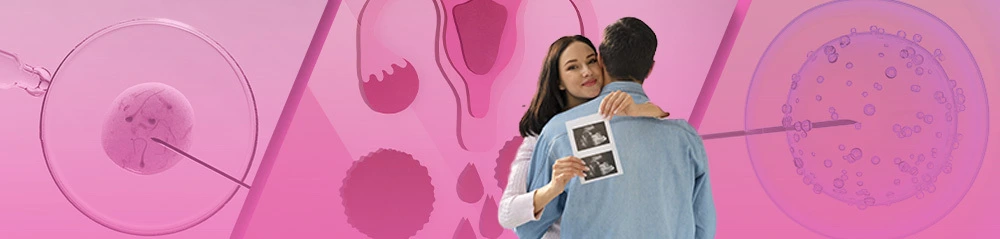
Understanding why vitrification is so important can make all the difference when making informed decisions and choosing the right program. Throughout this article, we’ll explain how this technique influences the final result, what advantages it offers, and why it has become a standard in assisted reproduction treatments related to surrogacy.
And before we go any further, it’s important to state this clearly: egg vitrification has transformed the way surrogacy programs are planned and executed , increasing flexibility, safety, and the chances of obtaining high-quality embryos.
Join us to understand it step by step.
What is egg vitrification?
Egg vitrification is an ultra-fast freezing technique that allows mature eggs to be preserved without ice crystals forming inside them, something that did happen with traditional freezing methods.
The result is a much higher egg survival rate, allowing them to be thawed later with a quality virtually identical to that which they had at the time of their extraction.
In simple terms, vitrification allows you to “pause biological time”, preserving the eggs in their optimal state.
This is crucial in surrogacy , where embryo production does not always occur immediately, or where the availability of genetic material must be coordinated with the medical and legal timelines of the process.
Why is egg vitrification relevant in surrogacy?
In a surrogacy process , the eggs usually come from the intended mother or a donor. These eggs must be fertilized in a laboratory (IVF) to create embryos, which are later transferred to the surrogate mother.
However, coordinating these events can be complex:
- The intended mother may need several cycles to obtain mature eggs.
- There may be geographical distance between countries or clinics.
- The surrogate mother must be at the ideal time of endometrial receptivity.
- Legal transit procedures can lengthen the process.
In all these scenarios, vitrification allows something essential: storing high-quality eggs until the ideal time to fertilize them and create embryos .
Without this technique, coordination would be much more rigid, less flexible, and with worse clinical outcomes.
Does egg vitrification really improve reproductive chances?
The short answer is yes.
The long answer is even more interesting. Egg vitrification improves reproductive chances in surrogacy for four main reasons:
Preserves oocyte quality
Egg quality is one of the most crucial factors for reproductive success.
Vitrification prevents the natural degradation of eggs over time.
This is especially important when:
- Fertilization is delayed.
- The woman who provides the eggs is over 35 years old.
- There are previous medical treatments that can affect ovarian reserve.
It allows obtaining several eggs in different cycles
If the intended mother has a low ovarian response, vitrification makes it possible to accumulate eggs in different cycles and subsequently fertilize them all at once to increase the chances of obtaining healthy embryos.
Facilitates synchronization with the surrogate mother
An embryo can only be transferred when the surrogate mother’s endometrium is in the exact receptivity phase.
Vitrification eliminates the stress of coordinating two completely separate menstrual cycles.
Maximizes the survival rate of the eggs
Unlike slow freezing, vitrification has very high survival rates. This increases the likelihood that fertilized eggs will develop into viable embryos.
surrogacy programs that use egg vitrification more stable, flexible, and have better clinical results.
How is egg vitrification performed?
There are a series of steps that ensure the eggs reach the moment of fertilization in the best possible condition. But vitrification not only provides stability; it also offers enormous flexibility when planning the treatment.
Once vitrified, the eggs can be used when medical and logistical circumstances are optimal. This allows for a more measured coordination of embryo development with the surrogate mother’s endometrial preparation, avoiding unnecessary cancellations and reducing the stress that often accompanies assisted reproduction treatments.
Furthermore, the ability to preserve eggs for long periods without losing quality facilitates other fundamental aspects:
- Accumulate more eggs in different cycles, if necessary.
- Repeat attempts without going through ovarian stimulation again.
- Transferring the genetic material to another clinic in case of logistical changes.
Overall, egg vitrification not only preserves biological quality but also offers a degree of flexibility that would be impossible with traditional techniques. This combination of effectiveness and flexibility is one of the reasons why it has become a key component in modern surrogacy programs.
How does vitrification influence embryo creation?
The peace of mind that vitrification provides isn’t solely due to its technical precision. It also influences how intended parents experience the process. Assisted reproduction can generate doubts, expectations, and sometimes a certain level of anxiety. Having vitrified, high-quality eggs introduces a sense of security that makes each stage of the process feel more controlled.
Furthermore, having pre-vitrified eggs allows embryo creation to take place when the entire medical team— embryologists , gynecologists, and surrogacy specialists—deems it the ideal time. This avoids rushing, uncoordinated cycles, or the need to make decisions forced by the biological clock.
It also allows for a more strategic approach to reproduction. For example:
- If the first transfer is unsuccessful, it is possible to generate new embryos without repeating ovarian stimulation.
- If you wish to have more than one child in the future, vitrified eggs can be used to plan new pregnancies without having to restart the entire treatment.
- If the surrogate mother requires more time to achieve ideal endometrial receptivity, vitrification ensures that the eggs will not be affected in quality during the wait.
All of this contributes to a more stable, predictable process that respects each person’s individual pace. Ultimately, egg vitrification not only improves medical outcomes but also facilitates a more emotionally calm and structured journey for those embarking on their family journey through surrogacy.
From this point, it’s natural to wonder how this technique fits into the overall treatment plan. Let’s delve deeper to understand this.
Egg vitrification and choice of country in surrogacy
Depending on the country where the surrogacy takes place, the logistics may require more or less time.
Vitrification helps resolve these types of situations:
- If the intended parents are traveling from another country.
- If the clinic requires waiting times for the surrogate mother.
- If it is necessary to repeat cycles.
- If it is necessary to transport the genetic material to another accredited clinic.
Without vitrification, many of these stages would not be viable or would have much lower success rates.
Does age influence the success of egg vitrification?
Yes, and it’s important to understand that.
Vitrification can preserve eggs in excellent condition, but it does not improve egg quality. Yes .
That’s why the younger the woman providing the eggs, the better the chances of obtaining viable embryos.
surrogacy programs use young donors precisely for this reason.
In that context, vitrification acts as insurance to preserve existing quality.
What advantages does vitrification offer to the surrogate mother?
Although the surrogate mother does not participate in egg retrieval, vitrification offers her significant advantages. Thanks to this technique, the entire process can be coordinated so that the embryo transfer takes place at precisely the optimal time in her cycle, without depending on the intended mother’s ovarian availability or response. This reduces the likelihood of canceled cycles and allows for calm preparation of her endometrium, under close medical supervision and without external pressure. When each stage is properly synchronized, the results are generally more predictable, and the chances of success increase.
Furthermore, one of the reasons egg vitrification has become a standard practice is its safety. Vitrified eggs are not damaged over time, do not undergo induced genetic alterations, and can be stored for years without losing their biological quality. They can also be transported between accredited laboratories with complete traceability, which is especially valuable in international surrogacy programs. Overall, the technique allows for the preservation of genetic material under stable, controlled, and highly reliable conditions.
Regarding overall treatment planning, vitrification provides a clear structure to the process. It allows each phase to be separated without depending on the biological rhythm of the woman providing the eggs: first, they are retrieved, then vitrified, fertilized at the optimal time, cultured to the blastocyst stage , and finally transferred when the surrogate mother is in the perfect receptivity phase. This sequencing not only reduces time pressure but also allows for clinical precision and improved coordination among all the professionals involved.
Conclusion
Egg vitrification has revolutionized assisted reproduction treatments and has become an essential component of surrogacy . It allows eggs to be preserved in their optimal condition, enables precise planning of each phase of the process, facilitates stress-free embryo transfer, and improves the likelihood of obtaining viable embryos.
For prospective parents, this translates into greater peace of mind, better success rates, and a clearer path to parenthood.
Understanding this technical aspect—though not always visible—allows you to begin your research on a much more solid foundation and ask questions that make all the difference when choosing a quality program.